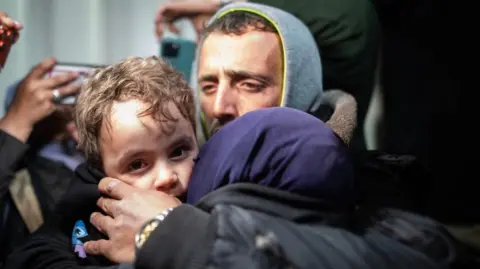
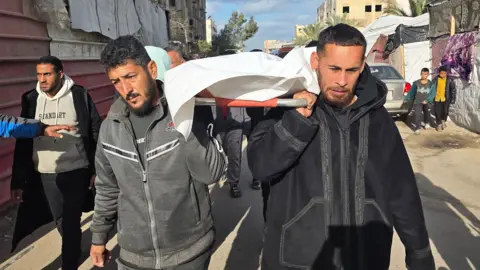
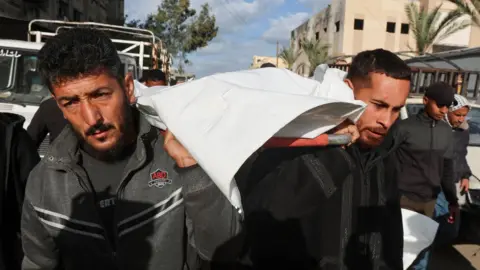
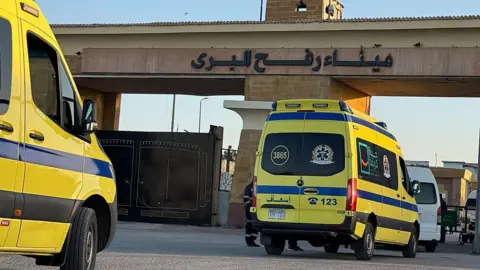
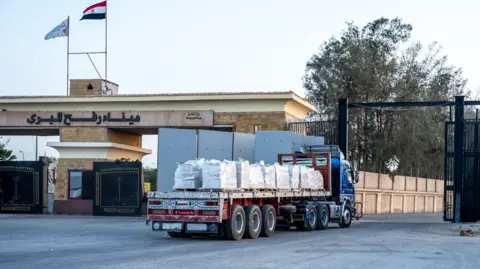
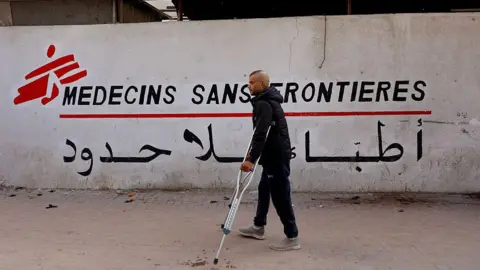
Medical personnel facilitated the transfer of a young Palestinian patient into an ambulance, marking this significant humanitarian development. Following Israel's invasion of Rafah, the crossing was shut down, leading to severe limitations on medical treatment for Gaza residents. Health officials reported only approximately 50 of the thousands in desperate need would be able to leave on this initial day, despite urgent calls from the World Health Organization that 12,000 to 14,000 individuals urgently require medical attention abroad.
Egypt's state-owned Al Qahera News broadcasted live as ambulances began arriving in Egypt carrying the injured. The cease-fire agreement stipulates that daily evacuations of wounded militants will be allowed, along with the eventual increase of other crossings and the resumption of goods movement. However, specific timelines for these provisions remain vague.
The devastation wrought by the conflict has left Gaza’s healthcare system in shambles, particularly affecting medical facilities like Al-Shifa Hospital, which Israel claims was used for military purposes by Hamas—a claim the group vehemently denies.
Administratively, a new security arrangement now exists for the Rafah crossing, involving Israel, Egypt, and the rival Palestinian Authority, which Hamas had governed prior to the conflict. While Israel has expressed reluctance to surrender control over Gaza, it has indicated that the Palestinian Authority would have a minimal role, mainly in terms of documentation.
Despite the positive steps taken with the reopening of Rafah, calls for increased urgency in evacuating those needing medical assistance remain crucial as the humanitarian landscape evolves.
Egypt's state-owned Al Qahera News broadcasted live as ambulances began arriving in Egypt carrying the injured. The cease-fire agreement stipulates that daily evacuations of wounded militants will be allowed, along with the eventual increase of other crossings and the resumption of goods movement. However, specific timelines for these provisions remain vague.
The devastation wrought by the conflict has left Gaza’s healthcare system in shambles, particularly affecting medical facilities like Al-Shifa Hospital, which Israel claims was used for military purposes by Hamas—a claim the group vehemently denies.
Administratively, a new security arrangement now exists for the Rafah crossing, involving Israel, Egypt, and the rival Palestinian Authority, which Hamas had governed prior to the conflict. While Israel has expressed reluctance to surrender control over Gaza, it has indicated that the Palestinian Authority would have a minimal role, mainly in terms of documentation.
Despite the positive steps taken with the reopening of Rafah, calls for increased urgency in evacuating those needing medical assistance remain crucial as the humanitarian landscape evolves.