
In brief
A year after Hurricane Helene devastated parts of North Carolina, communities and conservationists are working together to recover both infrastructure and the environment. Cleanup crews are removing debris, yet concerns grow over the long-term ecological impact of the recovery efforts. From endangered species to flood recovery, both humans and wildlife struggle against the lasting effects of the storm.
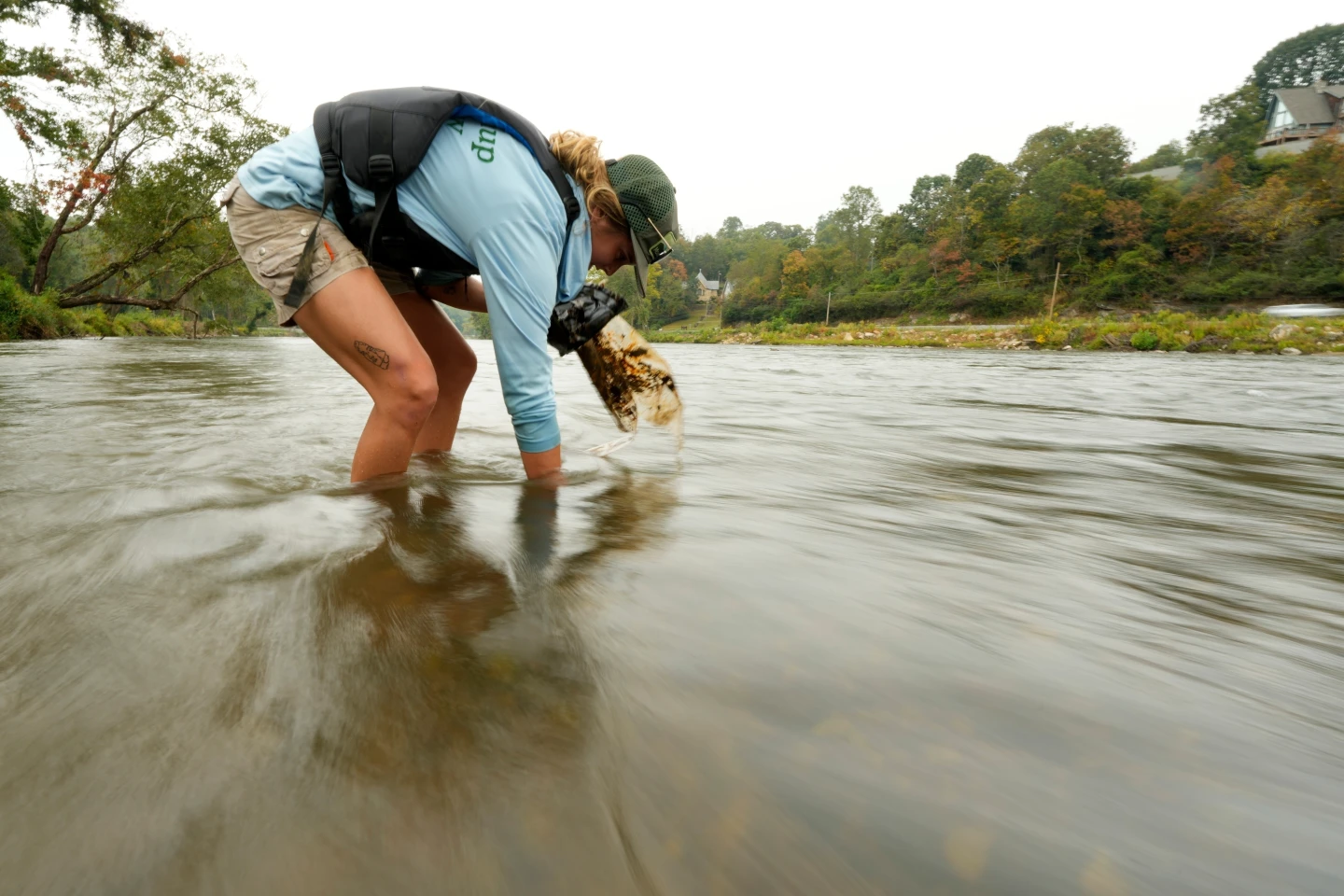
WOODFIN, N.C. (AP) — Clancy Loorham, a member of a cleanup crew, stood in waist-deep water, wrestling with a piece of debris pulled from the French Broad River. “I got a catfish in the pipe,” shouted the 27-year-old as he steadied himself against the strong current.
Just a year has passed since Hurricane Helene wreaked havoc across the southeastern U.S., leaving behind a staggering toll of over 250 lives lost and close to $80 billion in damages. In the North Carolina mountains, runoff from torrential rains washed away trees, homes, and wildlife habitats, prompting an urgent cleanup response amid mounting ecological concerns.
Efforts conducted by MountainTrue and other organizations aim to remove tons of debris, yet some contractors have inadvertently harmed the ecosystems they sought to help. Major species, including the Appalachian elktoe mussel, are already feeling the strain, and the muddy waters reflect the broader ecological distress.
“You can’t do this perfectly,” said Andrea Leslie, with the North Carolina Wildlife Resources Commission. “Emergency responses often overlook ecological impacts while focusing on restoring human safety and infrastructure.”
The cleanup extends beyond just debris removal. Families like Vickie and Paul Revis, whose home was swept away by the flooding, are trying to reclaim their lives while also adapting to new environmental realities. They rebuilt their home with a flood-resistant foundation, hoping to shield their new life from future disasters.
As rivers flow with renewed vigor post-cleanup, wildlife impacts remain uncertain. Conservationists emphasize the need for maintaining habitats alongside removal operations, highlighting that healthy ecosystems are tied to community resilience.
For Leslie Beninato from MountainTrue, the journey of restoring North Carolina’s rivers means grappling with both human stories of loss and ecological tales of survival and resurgence. “We’re creating habitats, but the question is what kind and at what cost?” he noted softly.
The delicate balance of rebuilding and conserving is pivotal for both communities and wildlife alike. As they navigate these complexities, any misstep could alter the ecological fabric forever.