In brief
Banu Mushtaq, who won the International Booker Prize for her work 'Heart Lamp', is at the center of controversy after her invitation to inaugurate the Mysuru Dasara festival in Karnataka drew criticism from opposition leaders. Concerns surrounding her Muslim faith and past comments regarding Hindu identities have fueled the political row, sparking discussions on secularism and inclusivity in regional celebrations.
International Booker Prize winning-author Banu Mushtaq has found herself in the midst of a controversy after she was invited to inaugurate a prominent festival in the southern Indian state of Karnataka.
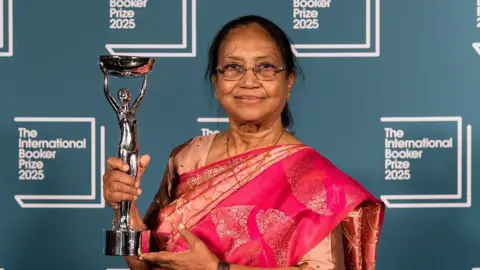
Last week, the state's Congress government announced that Mushtaq - who won the Prize earlier this year for her short story anthology, Heart Lamp - would inaugurate the Mysuru Dasara festivities in Mysuru (formerly called Mysore).
Mysuru Dasara, also called Naada Habba (which roughly translates to festival of the land in Kannada), is an annual 10-day event that has been celebrated for decades.
Thousands of people flock to the city to participate in the grand festivities, which include cultural performances, elephant parades, exhibitions and fireworks.
The decision to invite Mushtaq sparked criticism from some Bharatiya Janata Party (BJP) leaders - which is in the opposition in the state - who said that Mushtaq, a Karnataka-born Muslim, should not be inaugurating a Hindu festival.
Dussehra is a Hindu festival which celebrates the victory of good over evil, but Mysuru Dasara is conducted by the Karnataka state government and people of all faiths join in the celebrations.
Mushtaq has said that she was honoured to be invited to the festival and that she felt deeply connected to it, having participated in the festivities herself as a child.
But despite her expressing respect for the festival, the controversy has refused to die down.
Some BJP leaders have also taken offence to some of Banu's previous comments related to the Hindu goddess Bhuvaneshwari, who is considered to represent Kannada language and identity.
Mushtaq made history earlier this year when she became the first author writing in the Kannada language to win an International Booker.
Her award-winning book, Heart Lamp, which was translated into English by Deepa Bhasthi, was praised by judges for showcasing characters that were astonishing portraits of survival and resilience.
Moreover, she isn’t the first Muslim person to be invited to inaugurate the Mysuru Dasara festival. In 2017, KS Nisar Ahmed, a Kannada poet and author, had been given the honour.
Amid the criticism, a video of a speech delivered by Mushtaq last January began circulating online.
In her speech, she questioned the practice of associating a Hindu deity (Bhuvaneshwari) with Kannada language and identity, pointing out that it was exclusionary to her and other Muslims in the state.
Supporters of Mushtaq argue that the row is not just about her religious identity, but rather reflects a larger battle over the festival's inclusivity.
Karnataka's Deputy Chief Minister DK Shivakumar has defended the government's decision to invite Mushtaq, emphasizing the festival's inclusive nature.
Mushtaq too hasn’t yielded to pressure, remarking that active politicians should have a sense of what to politicise and what not to.