
In brief
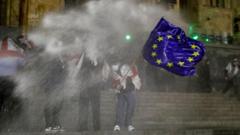
In Tbilisi, tensions escalate as thousands of protesters confront police in a struggle for Georgia's identity and future direction, amidst claims of electoral falsifications and fears of Russian influence.
With chants echoing through Rustaveli Avenue, the heart of Tbilisi, Georgia’s streets have become the epicenter of a fierce protest against government overreach that threatens the nation's European aspirations. Night after night, crowds adorned with European Union flags flood the area, demonstrating their unity against the ruling Georgian Dream party, which many suspect is steering the country back into Russia's orbit.The protests erupted in response to perceived authoritarian shifts from the government, compounded by the recent suspension of Georgia's strategic partnership with the United States. While the government categorically denies any connection to the Kremlin, its decisions have raised doubts about the nation’s commitment to its European path. As unrest grows, Prime Minister Irakli Kobakhidze remains defiant, rejecting calls for dialogue with protestors and decrying their actions as foreign-funded provocations.Over six days of escalating tension, police have responded with water cannons and tear gas, leading to numerous injuries among both officers and demonstrators. Legal representatives report alarming incidents of brutality against those detained, with many activists claiming that harsh treatment extends to political prisoners and journalists. Lasha Dzebisashvili, a political professor at a local university, notes that the severity of police tactics has reached unprecedented levels in Georgia, leaving many citizens fearful of governmental overreach.Amidst calls for fresh elections—following allegations of corruption during the last vote—Georgia stands at a complex crossroads reminiscent of Ukraine's past struggles against Russian influence. The ruling party's resistance to debate reforms or acknowledge election grievances has fueled further unrest. “We’re losing our country,” warns Nika Gvaramia, an opposition leader, underscoring the stark choice facing citizens: support for a European future or a return to the sphere of Russian dominance.Graffiti reading "No to Russia" adorns the parliament walls, reflecting an overwhelming sentiment among the masses against perceived attempts by the Georgian Dream to align with Russian interests. As protests continue, citizens from various sectors—public servants to opposition leaders—demand a government that prioritizes their ties with the West over ties with Moscow.In a dramatic turn, recent comments by the Prime Minister indicating that the government will not pursue negotiations with the European Union for the next four years have amplified fears of a pivot toward Russia, prompting praise from the Russian leader. The underlying tensions are palpable, as political dynamics shift not just within Georgia but also in the context of broader regional relationships.With public marches ongoing and participation growing from cities across the country, it is clear the discontent isn't limited to Tbilisi alone. As the situation unfolds, many are left wondering: will the government relent and consider new elections, or will the protests tire out under stringent police action? For now, thousands remain steadfast in their fight, determined to shape the future of their nation away from the shadows of Russian influence and into the light of European integration.
