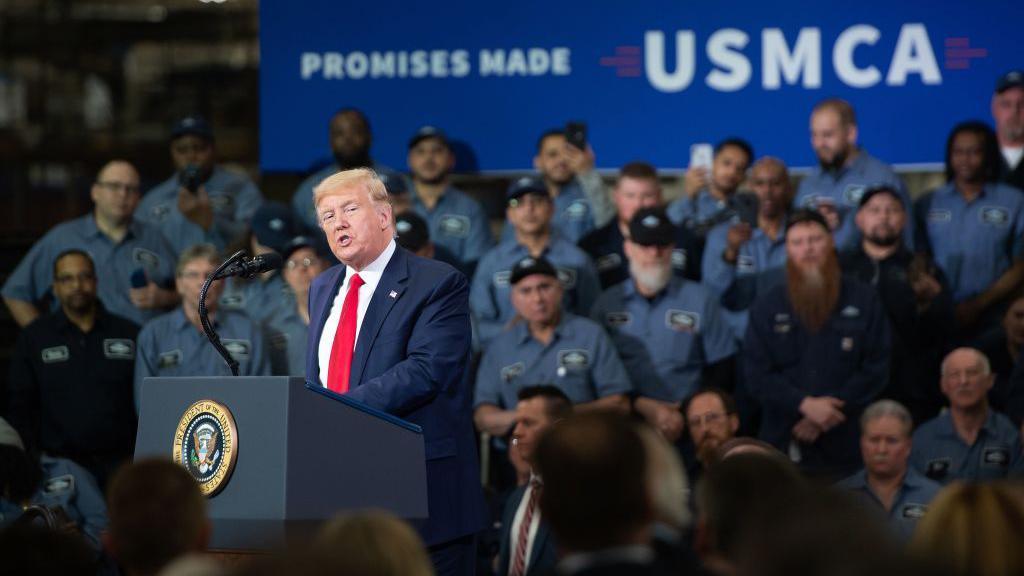
The United States has decided against renewing the landmark US–Mexico–Canada Agreement (USMCA) in its present form, effectively setting the trade pact on a 10‑year countdown toward termination unless all parties agree to a new extension.
The trade deal, which replaced NAFTA in 2020, carries annual trade of roughly $2 trillion ($1.5 trillion) for the region. Washington’s decision leaves the agreement in limbo, demanding that the United States, Canada, and Mexico negotiate changes every year in lieu of a 16‑year automatic renewal.
The administration cited unresolved disputes over vehicle parts, dairy market access and protection from third‑party countries such as China. It argued that a unanimous vote was impossible without addressing these key issues, prompting the shift to annual reviews.
Industrial and trade groups in the United States have welcomed the move, claiming that yearly negotiations give U.S. negotiators a stronger position to adjust the deal to domestic priorities, such as automotive manufacturing standards and steel imports. In contrast, the U.S. Chamber of Commerce warns that lack of long‑term certainty could damage sectors reliant on cross‑border trade, including manufacturing and agriculture.
The pact remains in force on a mechanical basis until 2036, but the absence of a binding renewal is a significant source of economic uncertainty for both exporters and importers in North America.
With key issues still unresolved, all three countries must convene annually to keep the USMCA alive. The decision underscores the growing friction around the agreement’s legacy and the future of North American trade amid mounting global pressures.