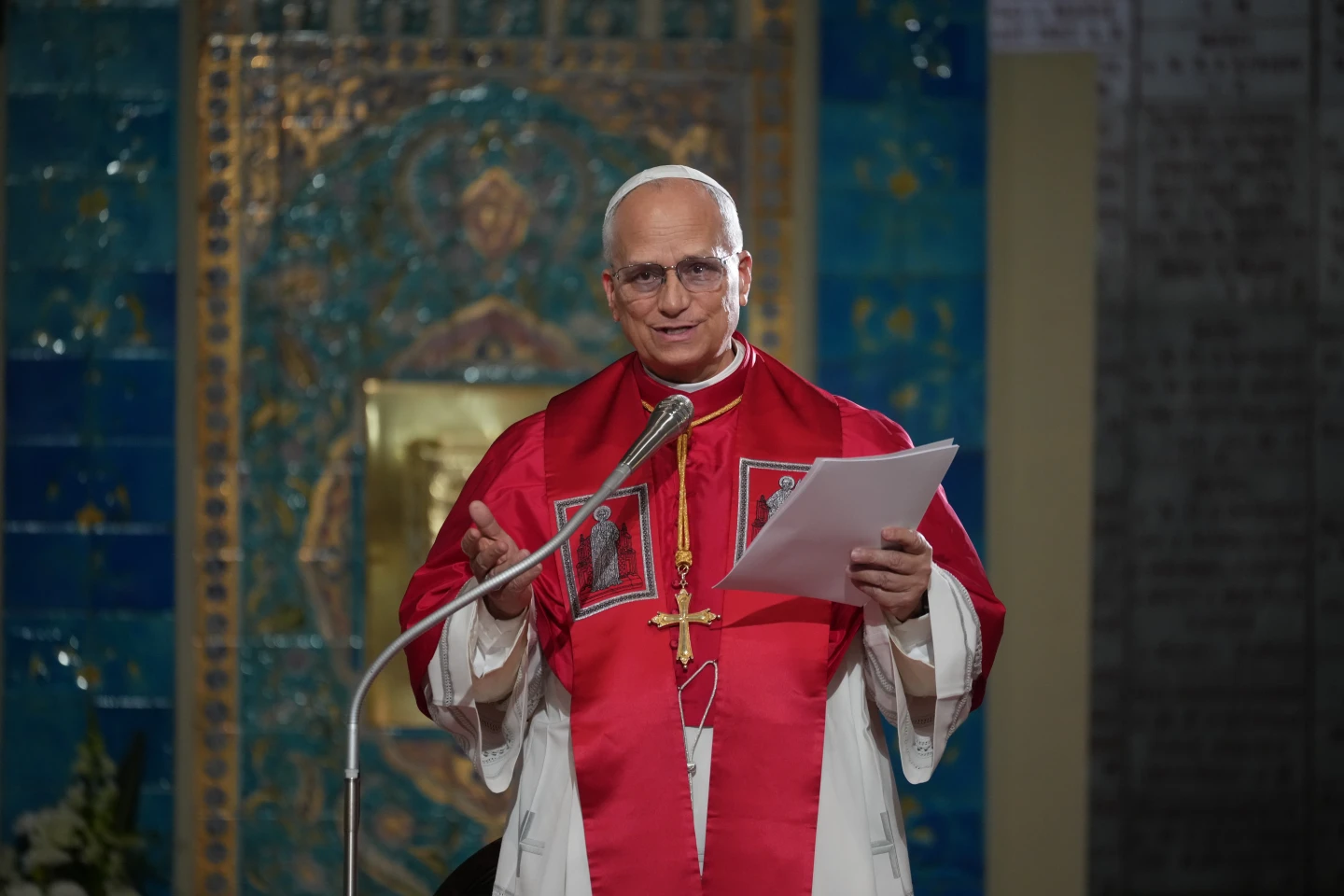
WASHINGTON (RTW News) — The backlash against President Donald Trump escalated recently as Catholic leaders across the U.S. condemned his unprecedented verbal attacks on Pope Leo XIV, the first American to lead the Roman Catholic Church. Despite Trump securing the majority of Catholic votes in the 2024 election, the fallout from his statements has raised concerns within the conservative ranks.
Pope Leo XIV has expressed that his messages are rooted in the Gospel and are not aimed at personally attacking Donald Trump. He advocates for peace and critiques attitudes contributing to conflicts, including the ongoing war in Iran.
Archbishop Paul Coakley, the U.S. Conference of Catholic Bishops' head, alongside Bishop Robert Barron from Minnesota, has openly criticized Trump for his remarks. Bishop Barron, who had previously extended an invitation to Trump at the White House, labeled the comments 'entirely inappropriate and disrespectful' and urged the President to apologize.
The discontent is also evident among conservative Christian evangelicals who feel Trump’s subsequent social media post, which portrayed him akin to a Christ-like figure, was offensive. Prominent commentator David Brody from the Christian Broadcasting Network stated, 'You’re not God. None of us are. This goes too far. It crosses the line.'
Earlier this week, Trump soft-launched the controversial image on Truth Social but took it down by midday Monday. In a public statement, he claimed, 'I never intended to liken myself to Jesus. It’s supposed to be me as a doctor, making people better.'
On the immediate impact of this conflict on his approval ratings, Trump remains defiant, asserting, 'There’s nothing to apologize for. He’s wrong.' As the midterms approach, the tension between the President and various Christian leaders raises questions about the future support he can expect from key voter blocs.
Amid this turmoil, some of Trump’s allies remain optimistic that the religious right will retain their loyalty, with Ralph Reed from the President’s faith advisory board noting that many have an appreciation for Trump's faith-based policies irrespective of their disagreement with him over the current social media incident.
Historically, U.S. presidents have had differing views with popes, yet experts assert that interactions like Trump’s critical commentary on Pope Leo XIV are unprecedented and underscore a changing landscape in the relationship between religion and politics in America.
Furthermore, the rift appears to extend beyond just Trump, as figures like Vice President JD Vance face scrutiny for their silence amid the discord, highlighting the complex dynamics of religious loyalty and political allegiance that could shape the electoral landscape come November.