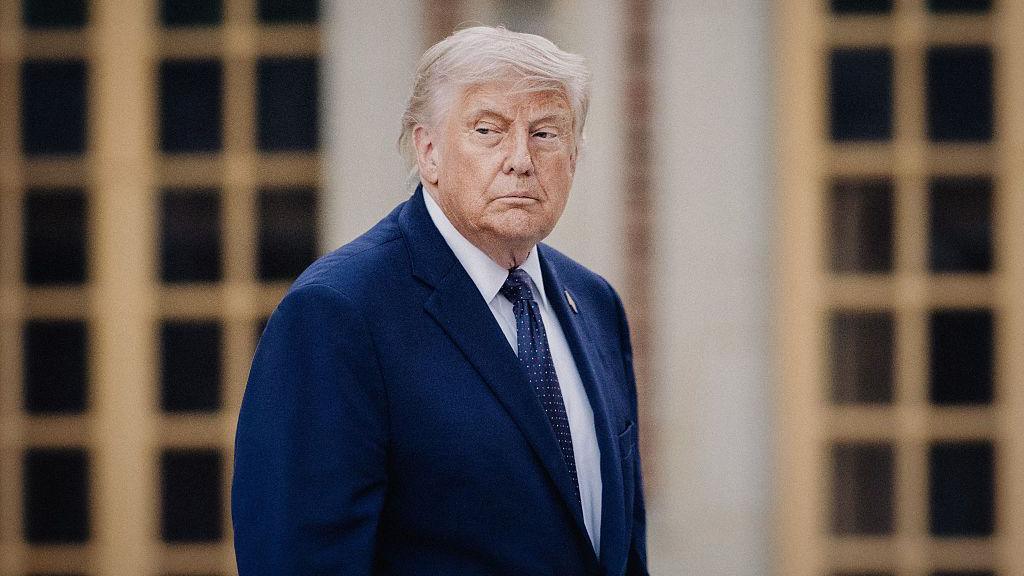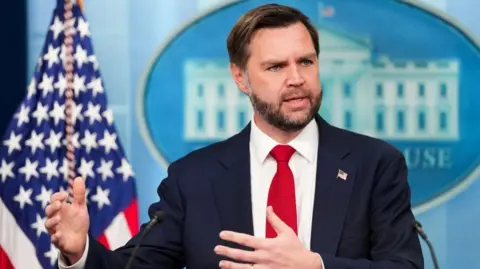
Many of those who tuned in to US President Donald Trump's news conference on Saturday were probably hoping to hear dramatic details of how US forces seized Venezuela's leader, Nicolás Maduro, in a pre-dawn raid.
But arguably a more surprising moment came when Trump announced that now that Maduro was in custody, the US would 'run' Venezuela 'until such time as we can do a safe, proper and judicious transition'.
In another unexpected development, he added that Secretary of State Marco Rubio had been speaking to Maduro's Vice-President, Delcy Rodríguez, who he said was 'essentially willing to do what we think is necessary to make Venezuela great again'.
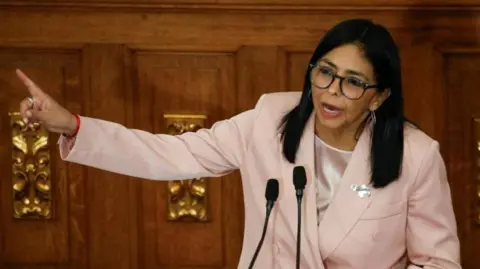
However, Rodríguez seemed less than co-operative in her own news conference later where she denounced Maduro's detention as a kidnapping and stressed that Venezuela would not become a colony.
Given these conflicting messages, many are asking who is now in charge in Venezuela.
Under Venezuela's constitution, it falls to the Vice-President to take over should the President be absent.
So, on the face of it, the Venezuelan Supreme Court ruling that Delcy Rodríguez was the country's acting president seems like a logical step.
But most Venezuela watchers had expected the immediate aftermath of a US intervention to look differently.
The US - and many other nations - did not recognise Nicolás Maduro as Venezuela's legitimate president, having denounced the 2024 election as rigged.
Maduro was declared president by Venezuela's electoral council (CNE), a body dominated by government loyalists.
But the CNE never produced the detailed voting tallies to back up their claim and copies of voting tallies collected by the opposition and reviewed by the Carter Center suggested that the opposition candidate, Edmundo González, had won by a landslide.
In view of that, the US and dozens of other countries recognised González as the president-elect.
González, a little-known former diplomat, had the backing of popular opposition leader María Corina Machado, whom he replaced on the ballot after she was barred from running for office by officials from the Maduro government.
With the security forces cracking down on the opposition in the aftermath of the election, González went into exile in Spain and Machado into hiding in Venezuela.
For the past 18 months, they have been urging Maduro to step down and lobbying for international support for their cause, especially from the US.
Machado's profile was boosted by her winning the Nobel Peace Prize for 'her struggle to achieve a just and peaceful transition from dictatorship to democracy' in Venezuela.
Following the publicity and recognition she received after embarking on a risky journey from her hiding place in Venezuela to Oslo to accept the award, many assumed that any post-Maduro scenario would see her returning to her homeland to take up the reins of power together with Edmundo González.
Machado herself posted a letter on social media following Maduro's capture declaring that the 'hour of freedom has arrived'.
Trump stunned journalists when he declared that Machado did not have the 'support or respect' to lead the country.
His comments revealed a startling shift in US strategy regarding Venezuela, now seemingly willing to work with Maduro's lieutenant, Delcy Rodríguez.
Rodríguez insisted that there was only one president in Venezuela and his name was Nicolás Maduro, promising to defend the country against foreign intervention.
This situation leaves the United States with a delicate balance to manage, as they urge Rodríguez to make decisions that align with their interests while facing the reality of her loyalty to Maduro's legacy.