
In brief
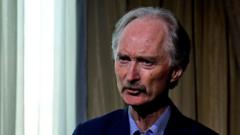
Following the recent overthrow of Bashar al-Assad's regime by HTS, UN Envoy Geir Pedersen underscores the vital importance of respecting the diverse rights of Syria's populace. He highlights the international community's readiness to assist, provided HTS demonstrates significant commitment to stability and inclusivity.
In a critical address, UN Special Envoy Geir Pedersen stressed that the nascent leadership in Syria must fulfill their pledges to respect the rights of various ethnic and religious groups within the nation. Speaking from Damascus, Pedersen articulated the dual emotions prevalent among Syrians: "a lot of hope and a lot of fear... at the same time." His statements follow a significant shift in power after Bashar al-Assad's regime was ousted by a coalition of rebels led by the group Hayat Tahrir al-Sham (HTS). HTS is noted as a Sunni Islamist group, which has publicly renounced its prior ties to extremist factions since parting ways with al-Qaeda in 2016. Despite its rebranding, the group is still listed as a terrorist organization by several international entities, including the UN and the EU. A notable shift within HTS leadership includes its head, Ahmed al-Sharaa, adopting his birth name instead of his former alias. Here, he asserts that HTS represents a nationalistic movement that can accommodate various communities. While Pedersen acknowledged Sharaa's recent positive rhetoric, he noted that many Syrians remain skeptical, doubting the actual implementation of promised reforms. "I'm hearing from many Syrians...They've got their doubts," he reported, reflecting the apprehension stemming from Syria's rapid changes. Emphasizing cooperation, he urged Sharaa to engage with a range of armed factions and the broader civil society to secure stability during this transitional phase. The prospects for lifting sanctions and removing HTS from terrorist lists will hinge on the group's future actions, according to the UN envoy. He expressed cautious optimism during a three-month period in which HTS has vowed to govern while working towards a sustainable resolution. Pedersen revealed that member states are closely observing the situation, hinting that success in implementing positive policies could lead to the potential relief of sanctions. He also addressed concerns regarding Israel's actions, condemning its military operations and territorial expansion in the Golan Heights as harmful to Syria's fragile transition. With Turkey's strong presence and collaboration with HTS in northwest Syria complicating matters, Pedersen reiterated the need for all involved parties to promote stability and prevent further displacements or refugee crises. Highlighting the long-lasting scars of nearly 14 years of conflict and authoritarian rule, he emphasized the necessity for HTS to facilitate justice for families of over 100,000 Syrians who are missing, echoing the imperative to avoid anger spilling into unrest. Pedersen's insights reveal that despite underlying tensions and geopolitical interference, there exists a collective yearning among Syrians to guide their own recovery and future. He maintains that if HTS delivers on its commitments in the coming weeks, there is renewed hope that the nation may embark on a path toward healing and reconstruction, yet failure could plunge it back into conflict.

