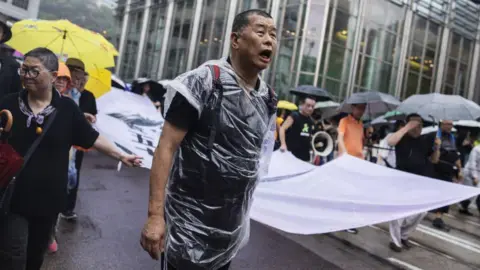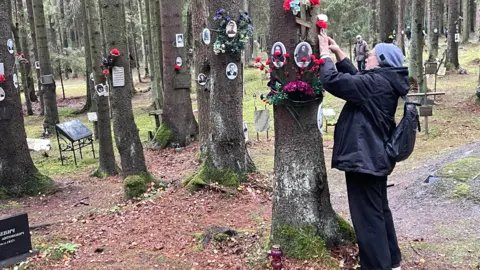
In a wood on the edge of St Petersburg they're reading out a list of names. Each name is a victim of the Soviet dictator Joseph Stalin's Great Terror. On Russia's annual Remembrance Day for Victims of Political Repression, thousands gather to honor those buried in the Levashovo Wasteland, who met grim fates in mass graves during the 1930s purges.
Yet, as memories of the past are celebrated, a new kind of repression stirs in the present. Today, authorities are keen to avoid discussions about Stalin's gruesome legacy and instead paint him as a wartime hero. The backdrop of increasing dissent in Russia is marked by stringent laws stifling free expression, especially anyone voicing opposition to the Kremlin.
At the forefront of this contemporary struggle is Diana Loginova, an 18-year-old music student and lead singer for the band 'Stoptime'. Following an improvised street concert where she and her band performed songs by exiled Russian artists critical of the current regime, Diana was arrested, forced to spend 13 days in jail, and is now facing additional charges in court.
Her performances, characterized by an uprising of youthful rebellion, have captured the support of significant crowds but have also put her at odds with authorities. Videos of Stoptime's street concerts attracted attention for featuring artists labeled as 'foreign agents' by the government, which has become a term synonymous with dissenters in contemporary Russia.
While music in many contexts harbors the power of peace and unity, Diana's concerts face heavy backlash from a government increasingly threatened by the sound of opposition. This sentiment resonates throughout the city where police swiftly dismantle unauthorized performances, continuing the cycle of conflict between creative expression and repression.
As Diana faces court, her supporters rally behind her, echoing sentiments of resilience and dedication in the realm of free speech. Diana stands firm, advocating for the importance of music while expressing gratitude for the solidarity shown to her cause.
Through Diana’s journey, the shadows of Russia's past linger, reminding audiences of the cost of speaking out against authority.