
In brief
A new bill could make Georgia the first state to mandate daily weapons checks for students in public schools as a response to a recent school shooting that claimed four lives. Advocates for the measure are pushing for advanced weapons detection technology to enhance safety, despite concerns over costs and the effectiveness of such systems.
Georgia is on the brink of becoming the first state in the U.S. to require all public school students to undergo daily weapons checks upon arrival. This initiative is a direct response to a tragic school shooting that left four dead in 2024.
“That rifle would have never reached our hallways,” stated Daria Lezczynska, a junior at Apalachee High School, where the shooting occurred. “Lives would have been saved. Families would not be grieving, and students like me would not be carrying this trauma.”
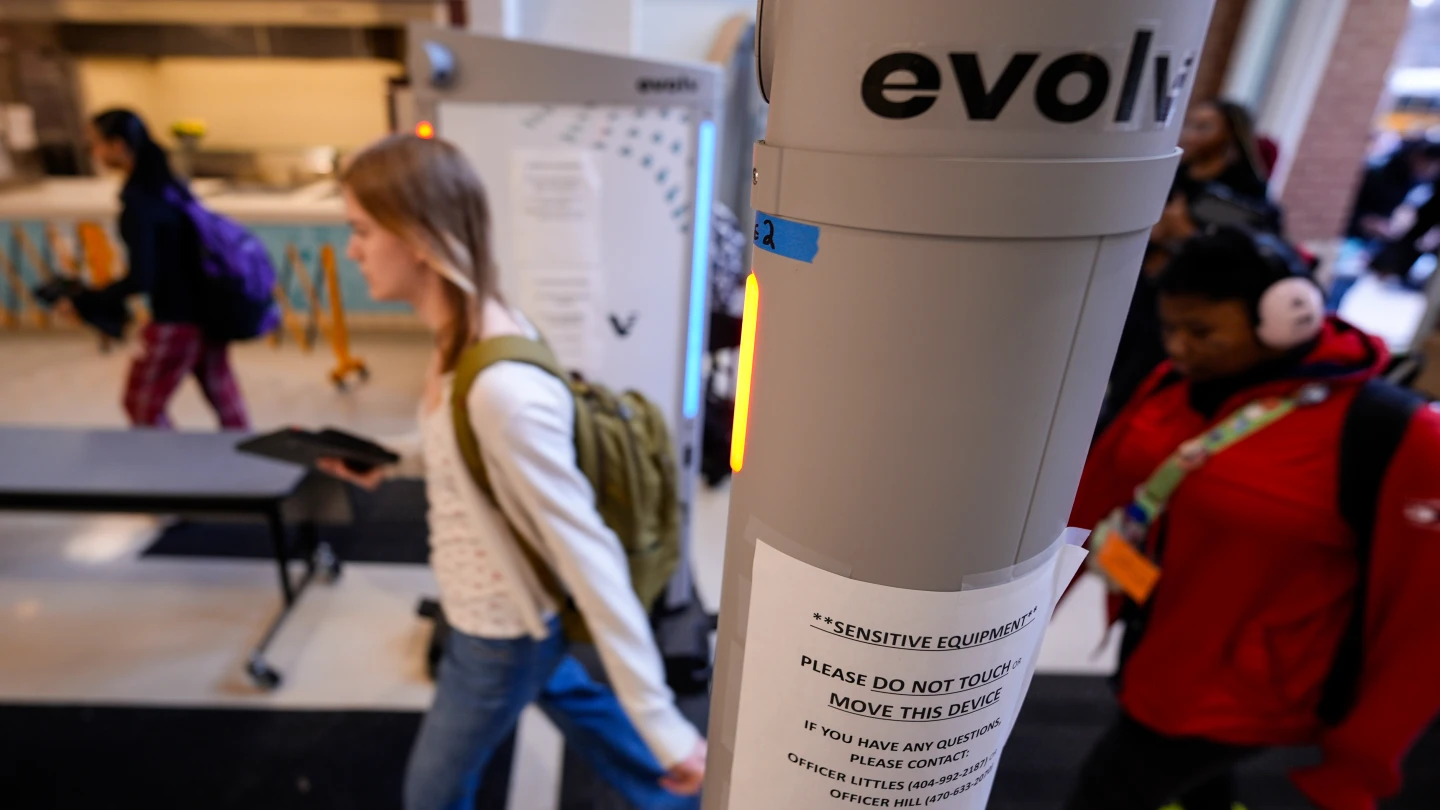
The proposed legislation would implement state-of-the-art weapons detection systems that combine computer analysis with camera technology to identify potential threats like knives and guns. While some schools already utilize traditional metal detectors, this new tech represents a significant advancement in safety measures.
Chuck Efstration, the bill's sponsor and a Georgia House Majority Leader, argues that such systems are necessary for the security of students and educators. Efstration likens the situation in schools to courthouses where weapon checks are routine.
However, the initiative raises concerns regarding the financial burden of installation, which can exceed $10,000 per system. Critics question whether these systems will be effective, especially given that there is limited empirical evidence linking such checks to the prevention of school shootings. Furthermore, doubts exist over the necessity of weapons detectors in elementary schools and whether the focus should instead be on reducing access to firearms.
The bill has progressed through the Senate and awaits final votes before potentially reaching Governor Brian Kemp's desk. The urgency for action is underscored by recent statistics indicating a rise in weapon-related incidents within schools, highlighting the pressing nature of school safety measures.
The potential implementation of these checks is not without its challenges. Teachers and staff may need to man checkpoints and handle bags, leading to questions of operational efficiency and feasibility, especially amid a crowded school environment.
As debates continue, both supporters and opponents of the bill emphasize the need for a balanced approach to ensure that school environments remain safe without infringing on student freedoms or introducing excessive security measures that may lead to a sense of fear rather than safety.