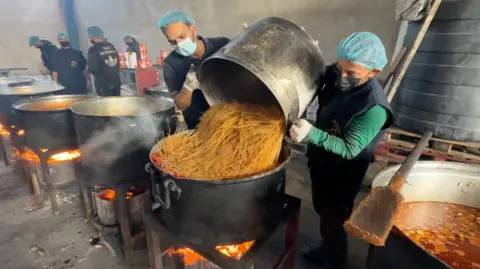
Garlic simmers in huge metal pots heated over open wood fires, as cooks prepare meals in one of the numerous community kitchens across Gaza. Among these is Anera, which has been operational since the ceasefire began six weeks ago.
Anera feeds over 20,000 people daily, yet vital supplies are still scarce. Team leader Sami Matar explains that while they have gone from using 15 pots to 120 a day, they lack essential proteins like meat and chicken.
Access to adequate food has been a pressing concern since the onset of conflict in October 2023, with extensive restrictions on supply routes exacerbating the humanitarian crisis. Reports of famine in Gaza City last August indicate the severe impact of the situation.
Although the situation has slightly improved with more food entering through partner organizations, residents like Aida Salha, a mother of six living in a makeshift tent, express that their struggles for adequate food assistance continue.
Mainly, community kitchens provide rice, pasta, and lentils, and the variability of menus remains limited. “We need food to be more diverse,” says Matar. “Fresh vegetables and essential proteins are crucial for a balanced diet, yet these essentials are not allowed through the crossings.”
The daily distribution of meals has increased to 1.4 million in the past week, but many families are still eating just one meal a day. Prices of basic goods remain high despite recent drops, making it challenging for households to secure enough food due to lack of funds.
As the situation grows ever more urgent with the onset of colder weather, humanitarian workers strive to support the needy, but the overwhelming uncertainty about the future looms large for many families.
Residents in Gaza yearn for a return to stability so that they can once again prepare meals for their children with dignity and love.