
In brief
Tobias Rausch, a 35‑year‑old far‑right politician, was elected speaker of the Saxony‑Anhalt parliament after the AfD came close to a majority in the state election. The vote, won with 14 votes from other parties, marked the first time since World War II a far‑right member held the post of speaker. Protesters gathered outside the building in Magdeburg, chanting “Never again is now.” Rausch’s victory signals a shift in the regional political landscape and raises uncertainty over the AfD’s future cooperation with mainstream parties.
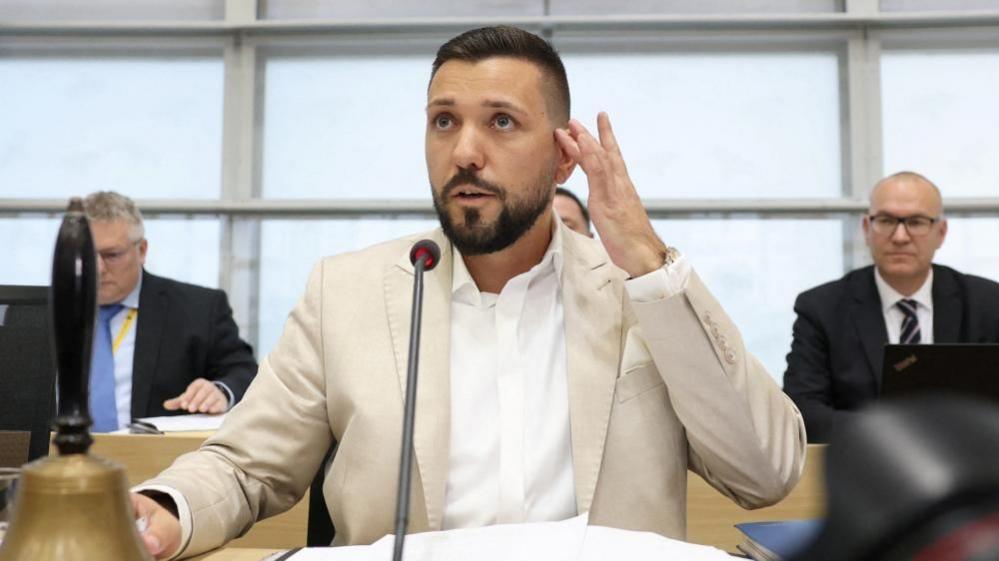
A month after the Alternative for Germany (AfD) won the Saxony‑Anhalt state election, Tobias Rausch was elected speaker in an unprecedented move, becoming the first far‑right parliamentarian to hold the position since World War II.
\Rausch, 35, won the vote with 14 votes from other parties, including nine members who are not from the AfD. The unexpected support from the centre and the left stunned observers and raised suspicions that the AfD may have gained backing from members of the Christian Democratic Union (CDU), which has ruled out cooperation with the party.
\Protesters outside the assembly hall chanted “Never again is now,” marking the event as a watershed moment for German politics. The atmosphere reflected deep unease as the AfD’s views—pro‑Russian, anti‑immigration, and intolerant of the LGBT community—hit the political mainstream.
\Although Rausch’s role is largely symbolic—he will chair debates, control access to the parliament building and represent the chamber at official events—his election signals a new era in Saxony‑Anhalt’s political landscape. It also hints at the AfD’s growing influence, which may press the region to reconsider its post‑war tradition of excluding the party from key positions.
\Meanwhile, Ulrich Siegmund, the AfD’s top candidate, continues his bid to become state premier, a move that will still require 42 votes out of the 83 in the legislature. The left‑wing Free Democratic Party (FSW) has rejected a coalition with the AfD and will seek an independent candidate for premier.
\The election of Rausch and the broader AfD success underscore the shifting political winds in eastern Germany and pose significant questions about the future of democracy and coalition politics in the country.
\