
In brief
As the intense conflict in Ukraine continues, volunteers like Anton Yaremchuk work tirelessly to evacuate civilians from the war-torn city of Pokrovsk, highlighting their resilience against the backdrop of fear and uncertainty.
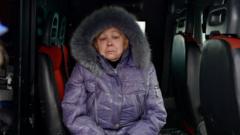
In the shadow of mechanical drones and echoing explosions, 35-year-old Ukrainian Anton Yaremchuk embarks on another perilous mission to evacuate civilians from the industrial city of Pokrovsk. As he navigates the treacherous roads in his armoured vehicle, he expresses gratitude for the cover of fog—a brief respite from the watchful eyes of Russian drones.Since the full-scale invasion began in February 2022, Anton has dedicated himself to rescuing civilians from a ravaged region where the Russian army's encroachment is alarming, now within 1.2 miles of the city. "It’s hell," he remarks as he surveys the destruction. The local population, dwindled to about 7,000 primarily elderly allies, awaits rescue from their beleaguered homes.Having left his promising career in Berlin, Anton co-founded Base UA, an aid group that has successfully relocated approximately 3,000 people from conflict zones. The urgency of his evacuation missions underscores the chaos unfolding in Pokrovsk, once a safe haven now marred by violence.The city, historically vibrant with a large hospital and bustling evacuation trains, stands on the brink of catastrophe. Local coal mines essential for Ukraine’s steel production have ceased operations due to attacks, crippling the economy further.The silent streets tell tales of sorrow, as Anton and his colleague Pylyp pass homes boarded up, the sound of distant artillery resonating through the air. Their round of evacuations begins amidst an ever-worsening landscape—assisted by a tourniquet and a medical kit prepared for the perilous conditions.Among those to be rescued, 71-year-old Olga prepares to abandon her home of 65 years. "It's hard to leave everything behind," Olga confides, her voice trembling with the weight of loss. As explosions become louder, she concedes that life there is no longer viable; "it's like hell."Despite successful evacuations, many remain reluctant to leave their homes behind, including an elderly woman who insists her son’s grave keeps her grounded. Anton remains persistent, attempting to convince those still on the streets of the lifelines available to them—free evacuation and support across the border.As time presses on, Anton expresses concern over the future. "I stopped looking too much ahead," he confesses when asked about conjectures involving potential peace talks under a new U.S. administration, anticipating that escalating tensions may prevail.Continuing the emotional journey, the last passenger is 75-year-old Lyuba, who enters the van, weighed down by her memories and the remains of her former life, now condensed into plastic bags. The silence persists among the group, darkened by the weight of shared fear. Listening to the guttural roars of war, Anton remains committed yet shattered by the relentless cycle of evacuations, unaware that just days prior, a fellow volunteer endured harrowing injuries while trying to save others. Now, as evacuations from Pokrovsk are paused, a solitary police unit known as the White Angels bravely continues missions amid the active threat of incoming threats, affirming that elderly residents are left vulnerable, teetering on the edge of collapse.As moral dilemmas ripple across the conflict zone and evacuations continue to unfold, the struggle for the innocent residents echoes throughout both local and international communities, who remain astutely aware of the inhumanity unfolding under ongoing violence.


