
In brief
As Trump prepares for his return to the White House, his team of appointees underlines the themes of hard-line immigration, a confrontational stance on China, and consolidation of presidential power.
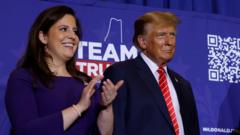
In shaping his new presidency, Trump has made significant appointments that signal a return to aggressive policies. Congresswoman Elise Stefanik has been chosen as the U.S. ambassador to the United Nations, illustrating an immediate focus on foreign affairs with a strict viewpoint on China.The day after his election victory, Trump commenced with nearly a dozen appointments, indicating a more organized and clear road map than his turbulent first term. The emerging administration includes a hard-line immigration team, led by Stephen Miller, who will oversee stringent measures, including potential mass deportations of undocumented immigrants. Homan, a controversial figure during Trump’s first term, returns as ‘immigration tsar’ to initiate large-scale deportation efforts, suggesting the administration will ramp up enforcement measures considerably.In terms of foreign policy, Trump is aligning himself with vocal critics of China. Mike Waltz, a retired Army colonel, was appointed national security adviser, while Stefanik has openly accused China of election interference. Trump's choice for secretary of state is still undecided, but Florida Senator Marco Rubio, known for his critical stance toward China, is a strong contender.Meanwhile, in a move that highlights the significance of tech in governance, Elon Musk has joined Trump's transition team, focusing on making government more efficient, indicating a shift towards privatization of certain governmental roles.As Trump gears for what looks like a robust campaign for executive power, he has put emphasis on bypassing congressional processes via “recess appointments.” Most prominently, his early picks reflect a desire to lean more on close allies and loyalists, such as South Dakota Governor Kristi Noem and Fox News host Pete Hegseth, moving away from the more conventional Republican establishment figures of his first term.This early composition of Trump's administration hints at an azimuth focused on immigration, opposition to China, utilizing executive actions, and showcasing loyalty as cardinal principles that will define the anticipated Trump 2.0 era. As he builds this foundation for his second tenure, only time will tell whether he can manage a more effective governance strategy than before.
