
In brief
Brazil's general election voting has finished, with President Luiz Inácio Lula da Silva and challenger Flávio Bolsonaro tied around a two‑point margin. Polls suggest a runoff on 25 October if no one gains a majority. Overseas ballots already show Lula leading in most countries, but Bolsonaro holds a wide lead in Israel and Japan. The result will shape both the Senate majority and the country’s diplomatic stance toward the United States.
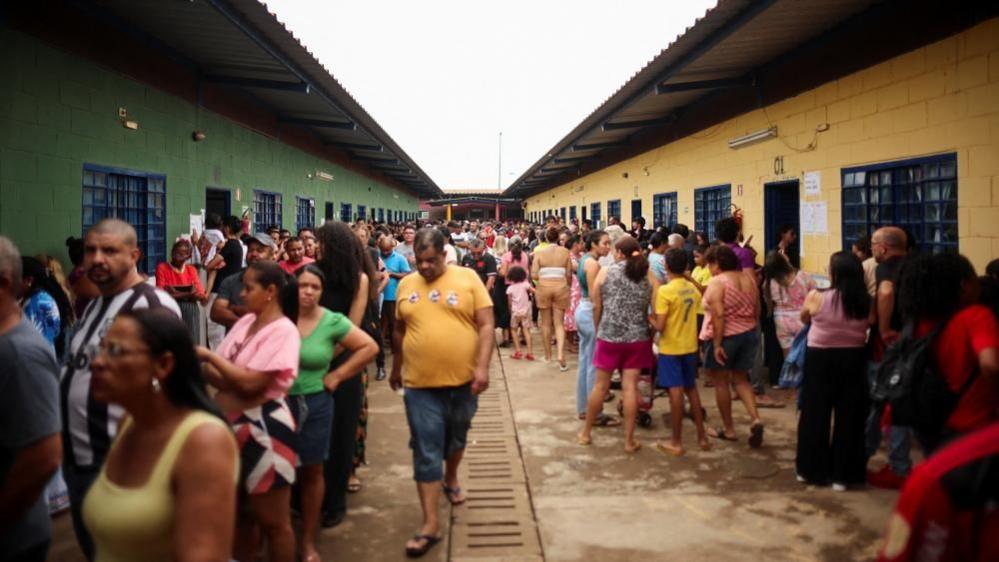
Voting in Brazil officially closed today, with thousands of citizens queuing to line up and cast their ballots in the most closely watched presidential race in the country’s recent history.
President Luiz Inácio Lula da Silva, 80, declared that the choice was between democracy and “barbarism” after he stamped his ballot. 45‑year‑old challenger Flávio Bolsonaro, son of the former president, vowed to “free the Brazilian people.”
Official results are expected within a few hours because voting is electronic, and polls show the two candidates separated by only two percentage points. If no candidate receives more than 50 % of the vote, a runoff will be held on 25 October.
Outside Brazil, overseas votes are already being tallied. In China, Lula won 56.6 % of the overseas ballots, while Bolsonaro captured 31.3 %. Bolsonaro was favoured in Israel (74.4 %) and Japan (71.6 %).
The outcome will also decide which party controls 54 of the 81 Senate seats up for election, giving Lula the chance to shape the chamber’s agenda for the next four years.
With the nation’s political atmosphere still tense after the 2022 coup attempts led by Jair Bolsonaro, the result could either bolster the right‑wing bloc that has run Washington’s rivals in several Latin American countries or preserve Lula’s left‑wing coalition that has clashed with U.S. interests over trade and security.

