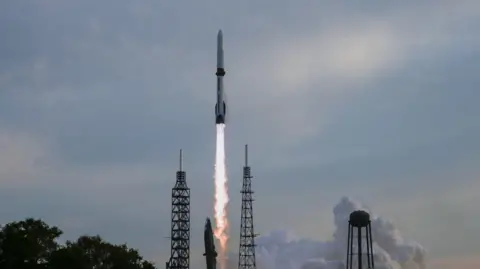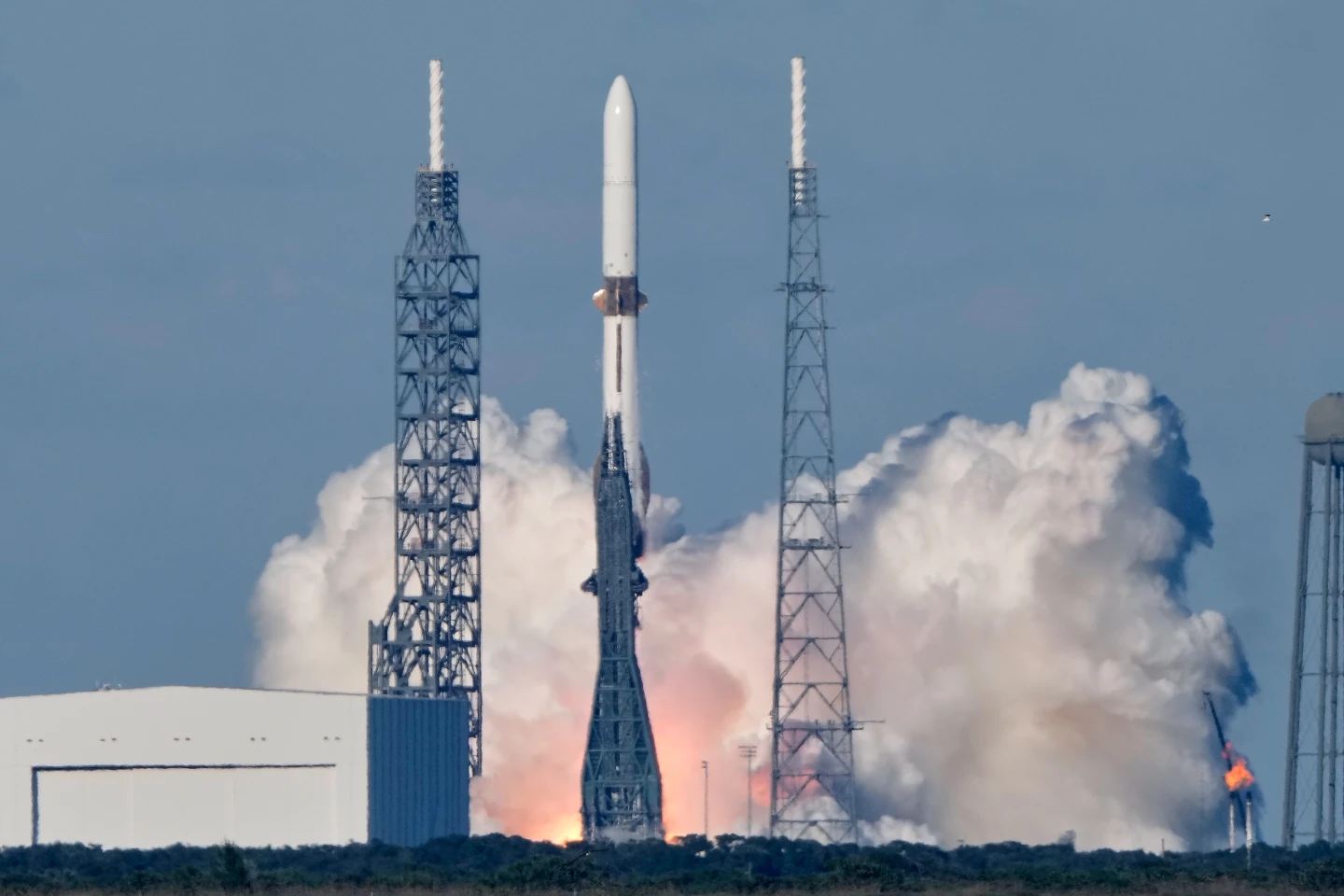
CAPE CANAVERAL, Fla. — Blue Origin launched its New Glenn rocket Thursday, successfully transporting two NASA spacecraft designed to explore Mars. This launch, which took place at Cape Canaveral Space Force Station, comes after a four-day delay due to inclement weather and solar storms impacting visibility.
The New Glenn rocket, towering at 321 feet (98 meters), will deploy the two identical Mars orbiters, named Escapade, which will hang near Earth for a year before venturing to the red planet to study its atmosphere and magnetic currents. The spacecraft's observations could help scientists understand how Mars transitioned from a wet, warm planet to its current arid state.
In an impressive feat, Blue Origin successfully recovered the booster following its separation, landing it upright on a barge located 375 miles offshore. This landmark event echoes similar recovery strategies employed by SpaceX to reduce costs in space exploration.
Next stop, moon! cheered Blue Origin employees after the successful landing of the rocket booster. This mission marks one of the first steps for Blue Origin as it seeks to build a presence in lunar exploration, with plans for a prototype lunar lander slated to be launched aboard New Glenn in the future.
The Escapade mission, operating within a budget of $80 million, aims to gain critical insights into the Martian atmosphere and prepare for future human missions. NASA is accelerating its plans to send astronauts back to the moon, competing to establish presence in lunar exploration.
As NASA and Blue Origin advance their ambitions in space exploration, the future looks promising for Mars research and potential human habitation beyond Earth.