
In brief
The recent Brics summit showcased the group's growth, welcoming new members and amplifying India's strategic positioning amidst an evolving geopolitical landscape.
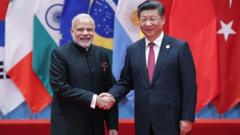
The Brics summit recently held in Russia has marked a pivotal moment for the group as it formally welcomed Egypt, Ethiopia, Iran, and the United Arab Emirates into its fold, solidifying its presence in the global arena. Over the years, Western skeptics have downplayed Brics, but the growing attendance of leaders and the inclusion of new nations signal its rising influence and offer India substantial opportunities.Historically, Brics has positioned itself as an alternative to the traditional Western-led governance models. India's partnership within the bloc, particularly with the new members, can be strategically advantageous. The country has established deep-rooted connections with Egypt, which has become a promising trade ally, while the UAE emerges as one of India's key partners. Ethiopia, with its long-standing ties to India, further complements this collaboration.Moreover, India's participation in Brics allows it to maintain a robust rapport with Russia, offsetting Western isolation attempts. Engaging with China within the group helps alleviate tensions, particularly following a recent border agreement aimed at fostering dialogue. This scenario provides Prime Minister Narendra Modi with the diplomatic leverage to enhance relationships with Chinese President Xi Jinping during the summit.Beyond diplomatic engagements, Brics embodies India's foreign policy goal of strategic autonomy. This principle enables India to cultivate diverse relationships across various geopolitical entities without committing to formal alliances. The synthesis of its presence in Brics and ties with Western powers exemplifies a balancing act that is essential to India's global strategy.The summit's joint statement reflected India's priorities, emphasizing engagement with the Global South, promoting multipolarity, and advocating for UN reforms. However, the influx of new members raises questions, particularly concerning the group's prospective anti-Western alignment, especially with countries like Iran joining the fold. Nevertheless, many new entrants maintain strong ties with the West, countering the notion of Brics shifting entirely against Western interests.The path ahead may face hurdles, particularly in achieving consensus among its expanding membership. Internal discord among some members poses challenges to effective cooperation. Despite this, India's relationships with members of Brics position it to contribute positively while navigating the complexities of a multipolar world.In conclusion, Brics offers India a unique platform to engage with a range of nations pursuing shared goals, including climate action and public health initiatives. The group’s internal dynamics and strategic objectives are likely to prevent it from morphing into an outright anti-Western front, ensuring that India's transformational journey within Brics aligns with its broader geopolitical aspirations. As the group evolves, India stands poised to leverage its growing weight to foster collaborative initiatives that benefit both its national interests and the global landscape.