
In brief
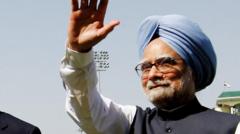
Former Indian Prime Minister Manmohan Singh, who passed away on Thursday, is being commemorated for his profound contributions to India's economic and social landscape during his two terms from 2004 to 2014. Renowned as a key architect of India’s economic liberalization in the 1990s, Singh seamlessly navigated India through financial turmoil and championed pivotal reforms that forever changed the nation's growth trajectory. His tenure, marked by both accolades and contention, forged a lasting legacy that significantly shaped the lives of over a billion Indians.
Singh's economic reforms began when he was appointed as finance minister in 1991 amid a dire financial crisis. His relentless pursuit of deregulation included devaluating the currency, reducing tariffs, and privatizing state-owned enterprises, which effectively transformed India into one of the fastest-growing major economies globally. Frequently heralded for his economic foresight, he expressed that "no power on Earth can stop an idea whose time has come" during his 1991 budget speech, a declaration that set the tone for India’s economic revival.When the Congress party returned to power in 2004, Singh was unexpectedly chosen over Sonia Gandhi as the consensus candidate to lead a coalition government. Despite being labeled a "remote-controlled" leader guided by the Gandhi family, Singh’s resolve strengthened over time. From 2004 to 2009, his leadership spurred on average GDP growth of around 8%, impressively steering India away from the pitfalls of the 2008 global financial crisis despite corruption allegations within his cabinet during his second term.In addition to economic policies, Singh's administration introduced landmark legislation that fortified rights within Indian democracy. Notably, the Right to Information Act empowered citizens to demand accountability from their government, while the rural employment scheme elevated rural incomes and reduced poverty. His government also enacted laws ensuring free and compulsory education for children, which contributed significantly to lowering dropout rates and improving literacy levels.Singh's 2005 apology to the Sikh community for the violent anti-Sikh riots of 1984 marked a courageous step toward reconciliation, highlighting his commitment to addressing historical injustices. Moreover, in a groundbreaking 2008 nuclear deal with the US, he ended India’s nuclear isolation and facilitated civilian nuclear trade, endeavors that further integrated India into the global economy despite facing fierce opposition.As tributes pour in for the former PM, reflections on his righting the course of a nation during turbulent times speak to a leadership defined by resilience, integrity, and an unwavering commitment to progress. His life and dedication to India remain inspirational, ensuring that his legacy will endure in the annals of the nation’s history.